I finished this book on Sunday:

Generations: The Real Differences Between Gen Z, Millennials, Gen X, Boomers, and Silents—and What They Mean for America’s Future is an awfully important read, if you ask me. I understand my students better for having read this book, and frankly, I understand me better too.
And I’m fearful for the future of this nation, for so many reasons. But that’s not for today.
From the publisher:
“The United States is currently home to six generations of people:
-the Silents, born 1925–1945
-Baby Boomers, born 1946–1964
-Gen X, born 1965–1979
-Millennials, born 1980–1994
-Gen Z, born 1995–2012
-and the still-to-be-named cohorts born after 2012.
“They have had vastly different life experiences and thus, one assumes, they must have vastly diverging beliefs and behaviors. But what are those differences, what causes them, and how deep do they actually run?
“Professor of psychology and “reigning expert on generational change” (Lisa Wade, PhD, author of American Hookup), Jean Twenge does a deep dive into a treasure trove of long-running, government-funded surveys and databases to answer these questions. Are we truly defined by major historical events, such as the Great Depression for the Silents and September 11 for Millennials? Or, as Twenge argues, is it the rapid evolution of technology that differentiates the generations?
“With her clear-eyed and insightful voice, Twenge explores what the Silents and Boomers want out of the rest of their lives; how Gen X-ers are facing middle age; the ideals of Millennials as parents and in the workplace; and how Gen Z has been changed by COVID, among other fascinating topics.
“Surprising, engaging, and informative, Generations will forever change the way you view your parents, peers, coworkers, and children, no matter which generation you call your own.”
Last week I also devoured All the beauty in the world: The Metropolitan Museum of Art and Me by Patrick Bringley. His 2023 memoir of a decade as a guard at The Met is a rumination on life and love and loss and art, and is a pitch-perfect little book.
From one on-line review:

“Do not go into this book expecting stories about funny experiences or hijinks in the museum. Instead this is a very thoughtful memoir of how Patrick Bringley sought solace and a place to “just be” after the death of his older brother and after his own realization that he needed to escape the rat race publishing job he had in NYC. Remembering the family trips to the Art Institute of Chicago, Bringley applied for a position as a guard at the Metropolitan Museum of Art.
“This is a job that pays you to stand and watch, and – if you want – to think. Where you don’t have to “do” anything, sell anything, push anything at anybody and you get to do this all day – or evening – long. Needing some head space to mourn his brother, he begins ten years of wearing a cheap blue polyester suit, wearing out ten pairs of shoes, and using his $80/year allowance for socks all while getting to soak in some of the most glorious artwork in the world. From ancient Egypt to 20th century rural Alabama quilts, from a newly designed Islamic gallery, to pointing out where the “irises” are (Van Gogh), and helping frazzled mothers (who didn’t realize that art is all that the museum has – no dinosaurs or other hands on stuff) with rambunctious children head towards the mummies and medieval armor.
“Bringley learns the rhythm of the museum, which galleries he prefers (the ones with wooden floors are easiest on the feet), which individual artworks he enjoys most, that working the Met Gala is a bust (he got stationed too far away to see anything), and gains a new appreciation for all the artists who have captured humanity and human feelings and experiences over the millennia. He can pick out various “types” of visitors and discovers the ones he enjoys the most (those without preconceived notions who are willing to open themselves to the artworks, unafraid to admit ignorance, ready to learn).
“He gives a behind the scenes glimpse of how the museum works, the variety of guards (about half are immigrants and many are older – some coming to the job in middle age), becomes a father, and begins to realize that he’s ready to try something different now.”
Over the weekend I listened to The Apple Tree by Harnick & Bock, in the original cast album. Barbara Harris. Alan Alda, with a credible singing voice just a half-decade before he became Hawkeye Pierce. It’s an odd show with some fine songs.

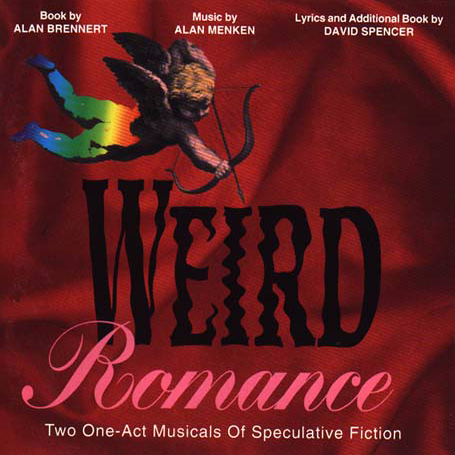
I also read through the piano/vocal score of Weird Romance by Alan Menken and Alan Brennert. Again, some very useable and teachable songs!
 jeffreycarter.wordpress.com